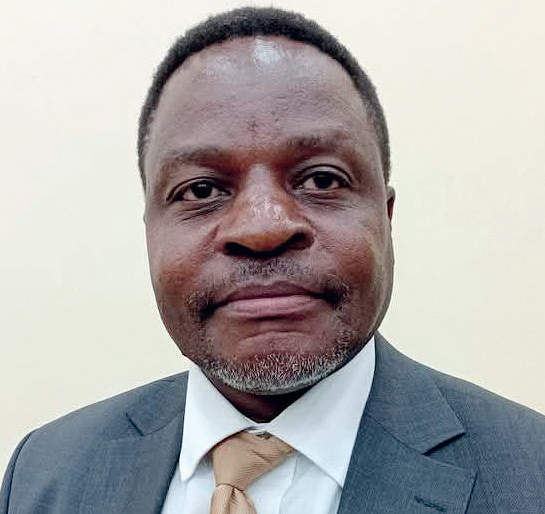
Ethiopia-based economist Hopestone Kayiska Chavula says the country has failed to benefit from strides the economy has registered over the years towards reducing inequality.
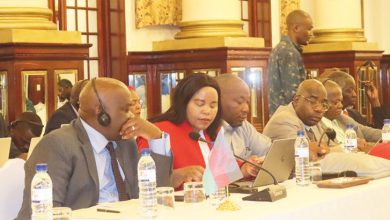
Speaking during the launch of the Oxford Handbook of the Malawi Economy at the University of Malawi School of Law, Economics and Government in Zomba on Friday, the book’s lead editor said the economy reversed some of the surge in inequality between the rich and the poor between 2000 and 2010, where consumption of the bottom 40 percent of the population fell by 2.21 percent.
He said the economy grew by three percent annually between 2010 and 2016.
Chavula said the developments led to a decline in the Gini coefficient from 45 in 2010 to 38 in 2016 while remaining at this level by 2019, putting Malawi below the average of the sub-Saharan Africa region, according to the World Bank.
Said Chavula “These dynamics would have reduced poverty, but the low consumption growth plus population growth, have offset the associated potential gains.
“Efforts to improve the situation have mostly borne little fruit and have mainly been derailed due to, among others, low productivity levels, limited structural transformation and inadequate investment in infrastructure development.”
Chavula, an economist at the United Nations Economic Commission for Africa in Ethiopia, observed that in the 1980s, Malawi, Bangladesh and Chad, currently among the poorest countries in the world, had gross domestic product (GDP) per capita higher than that of China in 1980 standing at $287.4 (about K503 237), $216.1 (about K378 391) and $243.3 (about K426 058) respectively, while China was at $194.8 (about K341 094).
However, by 2012, China’s GDP per capita had jumped 30-fold from $194.8 to $6 300.6 (about K11 million), leaving countries such as Malawi far behind with its per capita GDP increasing by only $275.6 (about K482 575), a 95.9 percent increase, in 30 years, while China’s increased by $6 105.8 (about K10.6 million), increasing by 3 134.4 percent.
On his part, National Planning Commission (NPC) esearch and capacity building manager Andrew Jamali observed that the disconnect between academics and politicians is not helping the economy, saying there is need to locate how best political and national interest can align to transform people’s lives.
“We must be strategic in the way we are engaging with politicians so that we invoke their consciousness to see this as something that also reflects on their own outcomes,” he said.
Unima School of Law, Economics and Government executive dean Professor Happy Kayuni, who is also one of the contributors in the book, said while the book offers practical solutions to current economic and developmental challenges, it will help students to apply such knowledge as they prepare to make their contribution to the economy.
The book was co-edited by Malawian professor of economics at University of KwaZulu-Natal in South Africa Harold Ngalawa, associate professor and director of surveys at Afrobarometer Boniface Dulani and Thomas Chataghalala Munthali, former NPC director general.